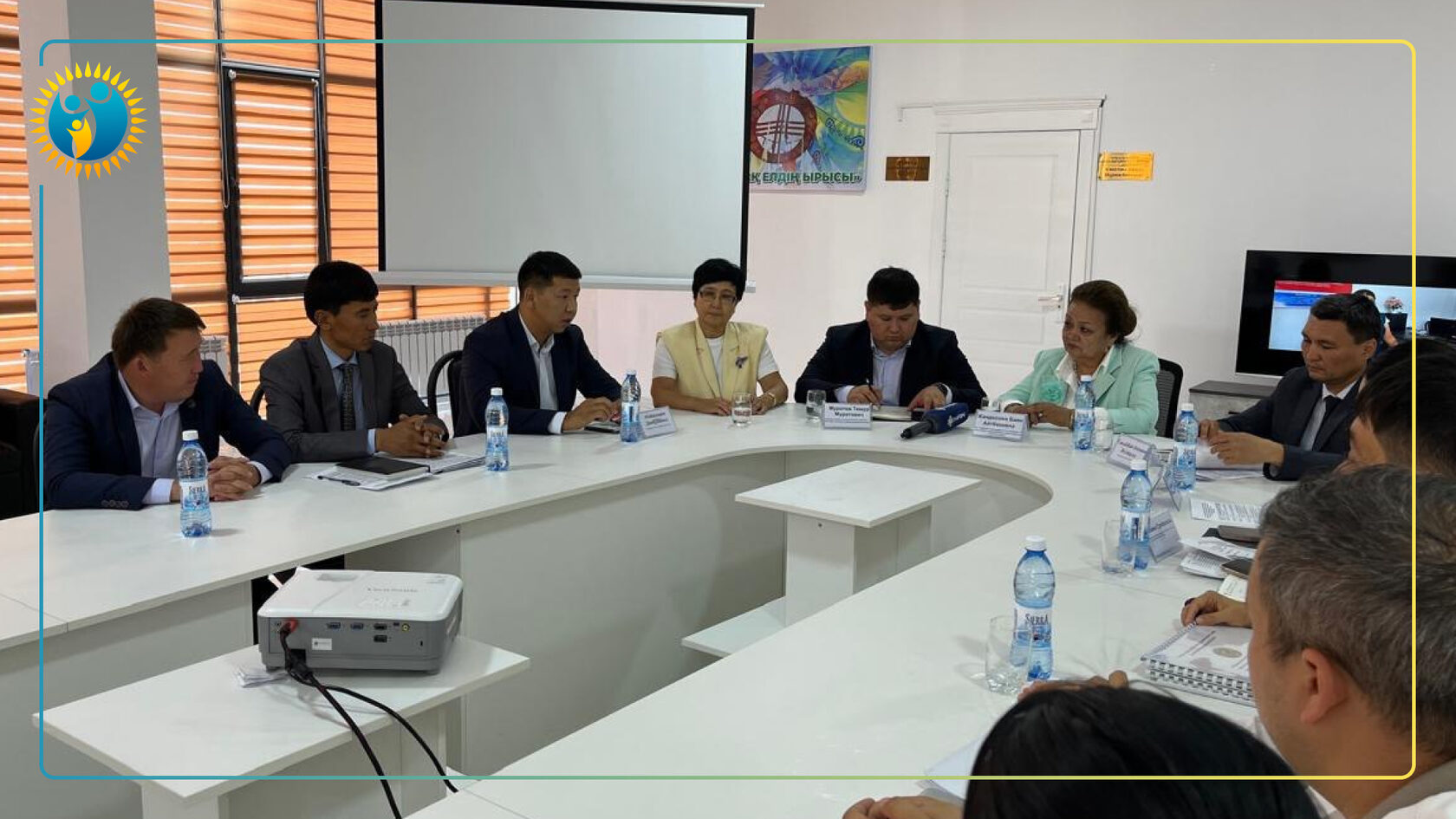
A monitoring group of the National Commission for Women Affairs, Family and Demographic Policy under the President of the Republic of Kazakhstan has begun its work in the Turkistan Region.
The working group, led by Bayan Zhandosova, met with Deputy Akim of the region Beisenbay Tazhibaev. Representatives of three ministries — Culture and Information, Healthcare, and Labor and Social Protection — also joined the discussions.
The main focus was on Family Support Centers.
Currently, 17 such centers operate in the region. Their activities have been digitized through the FSM Social mobile application, which automates the provision of assistance and allows mobile teams to promptly transmit alerts about families in need of support.
Mobile groups have been established at the centers for a one-year term. They include 4,997 members: 613 representatives of local executive bodies, 674 police officers, 2,743 education workers, and 967 healthcare specialists. Of these, 4,693 (94%) have already been trained and registered in the system.
Members of the Commission conducted monitoring of several centers. Their attention focused on efforts to preserve marriages, resolve conflicts, support citizens in difficult life situations, and digitalize processes. Special emphasis was placed on the work of mobile groups and their safety.
The inspection also covered Youth Health Centers, where discussions addressed uninterrupted operations, methodological support for women’s consultations and maternity wards, improving professional qualifications, and strengthening psychological services. A proposal was made to introduce fees for anonymous consultations.
As a result of the visit, the Commission recommended that the relevant authorities develop a comprehensive plan to strengthen youth reproductive health and prepare adolescents for responsible parenthood.
The working group, led by Bayan Zhandosova, met with Deputy Akim of the region Beisenbay Tazhibaev. Representatives of three ministries — Culture and Information, Healthcare, and Labor and Social Protection — also joined the discussions.
The main focus was on Family Support Centers.
Currently, 17 such centers operate in the region. Their activities have been digitized through the FSM Social mobile application, which automates the provision of assistance and allows mobile teams to promptly transmit alerts about families in need of support.
Mobile groups have been established at the centers for a one-year term. They include 4,997 members: 613 representatives of local executive bodies, 674 police officers, 2,743 education workers, and 967 healthcare specialists. Of these, 4,693 (94%) have already been trained and registered in the system.
Members of the Commission conducted monitoring of several centers. Their attention focused on efforts to preserve marriages, resolve conflicts, support citizens in difficult life situations, and digitalize processes. Special emphasis was placed on the work of mobile groups and their safety.
The inspection also covered Youth Health Centers, where discussions addressed uninterrupted operations, methodological support for women’s consultations and maternity wards, improving professional qualifications, and strengthening psychological services. A proposal was made to introduce fees for anonymous consultations.
As a result of the visit, the Commission recommended that the relevant authorities develop a comprehensive plan to strengthen youth reproductive health and prepare adolescents for responsible parenthood.