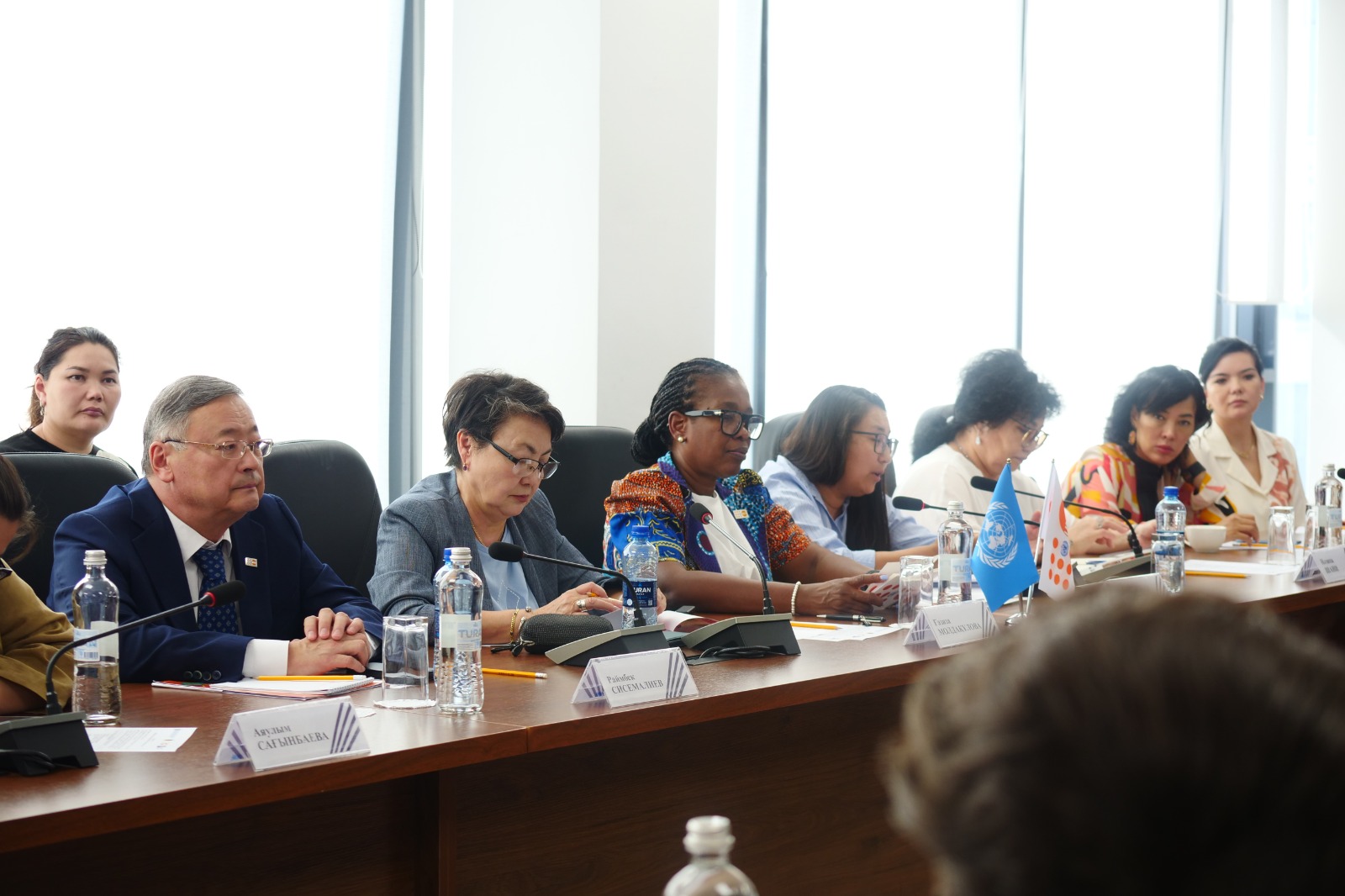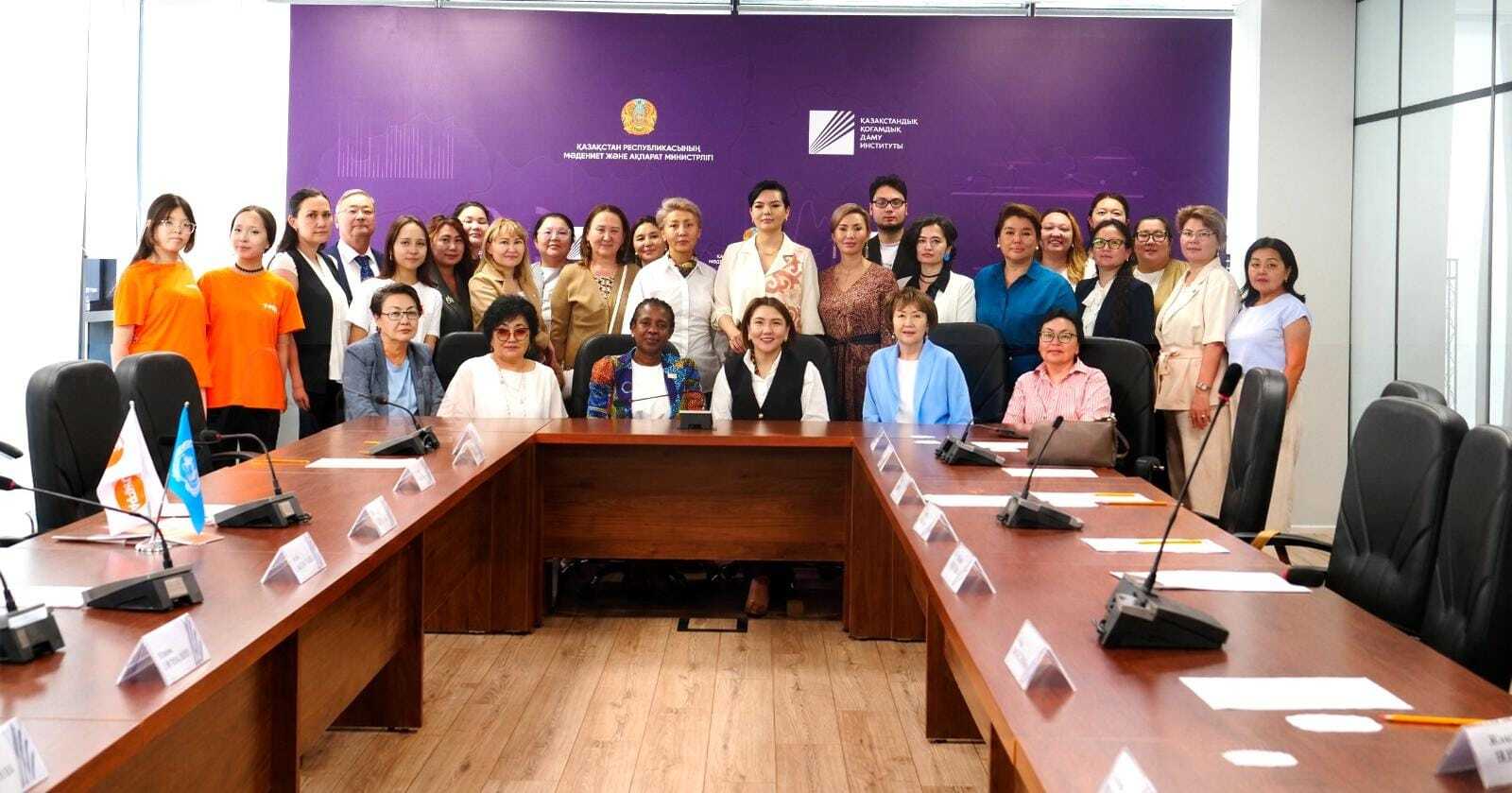
Experts discussed global trends and the future of Kazakhstan’s youth and families at a round table in Astana. The event, titled “Youth, Family and Demographic Development of Kazakhstan,” was dedicated to the presentation of the United Nations Population Fund (UNFPA) global study Demographic Futures Survey 2026 and was held at the Kazakhstan Institute of Public Development.
The event was held within the framework of the Consortium of Research Organizations in the field of family, gender and demographic policy, operating under the National Commission for Women and Family and Demographic Policy under the President of the Republic of Kazakhstan. It was organized jointly with UNFPA and with the support of the Ministry of Culture and Information of the Republic of Kazakhstan.
The discussion brought together Kairat Kambarov, Chairman of the Committee on Youth and Family Affairs of the Ministry of Culture and Information of the Republic of Kazakhstan; Chinwe Ogbonna, UNFPA Representative in Kazakhstan; as well as representatives of government agencies, international organizations, research centers and the academic and expert community. Participants discussed the life priorities of the younger generation, changes within the family and factors shaping the country’s demographic future.
Zhuldyzai Iskakova, Chairman of the Board of the Kazakhstan Institute of Public Development and Deputy Chairman of the National Commission for Women and Family and Demographic Policy, delivered welcoming remarks. She emphasized the importance of scientific research in the fields of family, gender and demography and spoke about the work of the Consortium, which currently brings together 15 expert organizations.
“The Consortium’s mission is to bring together the efforts of scientists and analysts and communicate research findings to decision-makers, helping to develop effective, evidence-based public policy. The global Demographic Futures Survey 2026 gives us an opportunity to better understand the aspirations and values of young people in Kazakhstan and compare them with those of young people in other countries. This is both informative and highly valuable,” said Zhuldyzai Iskakova.
Kairat Kambarov, Chairman of the Committee on Youth and Family Affairs of the Ministry of Culture and Information of the Republic of Kazakhstan, noted that the findings of the UNFPA study are consistent with data from the national reports Kazakhstani Families and Youth of Kazakhstan. They show that having a suitable partner, sharing common life goals, being emotionally prepared for family life and having a fair distribution of family responsibilities are particularly important to young people.
“In 2024, the Committee on Youth and Family Affairs of the Ministry of Culture and Information of the Republic of Kazakhstan, together with UNFPA, piloted a free premarital education program for citizens applying to register their marriage in Astana and Shymkent. The results demonstrated strong demand for the initiative. In 2025, family support centers began implementing the program in the regions, where more than 300 couples have already successfully completed the training,” Kairat Kambarov said.
This year, the Ministry of Culture and Information of the Republic of Kazakhstan developed and approved a Methodological Guide and Standard Program for premarital education. By the end of the year, the program is expected to be implemented across all family support centers in the country. The Parents Academy project and the www.ata-ana.kz platform are also being implemented to strengthen parenting skills and competencies.
Chinwe Ogbonna, UNFPA Representative in Kazakhstan, noted that young people, regardless of where they live, continue to value strong relationships, marriage and parenthood. At the same time, achieving these goals increasingly depends on economic stability and access to decent housing.
“The findings do not point to an unwillingness among young people to start families. Rather, they point to uncertainty about the future and concerns about whether they will be able to realize their family plans,” the speaker emphasized.
Gaziza Moldakulova, Coordinator of the National Population and Gender Programmes at UNFPA Kazakhstan, presented the findings of the global Demographic Futures Survey 2026. She noted that the study is one of the largest international comparative surveys examining young people’s views on family, relationships and the future. It surveyed more than 108,000 internet users aged 18 to 39 across 73 countries and territories.
“One of the key findings is that family and parenthood remain important values for young people, but their willingness to start a family increasingly depends on socio-economic stability and personal readiness. More than two-thirds of respondents would like to marry or live with a partner. At the same time, 81% consider financial stability an important condition for entering into a partnership, while 88% see it as important when making decisions about parenthood. Stable employment and emotional readiness also play a significant role,” Gaziza Moldakulova said.
Sabina Shaimerdenova, Acting Director of the Scientific Research Center “Youth,” presented findings from the sociological study Youth of Kazakhstan on the impact of the digital environment on young people’s socialization and civic engagement.
“The digital environment is playing an increasingly important role in shaping young people’s values, identity and life strategies. In this context, media literacy, digital culture and the ability to use technology consciously and responsibly are becoming particularly important,” the expert noted.
Elmira Otar, Director of the Center for Family and Gender Policy Research at KIOR, highlighted research findings that challenge the stereotype that young people are turning away from family values. Instead, the data point to these values taking on new meaning.
“Between 2020 and 2024, the share of young people who associate family with happiness and love increased from 32.7% to 56%, while the share associating family with responsibility and obligations rose from 15.4% to 26.3%. This does not indicate a decline in the value of family, but rather its reinterpretation through the ideas of partnership, love and mutual support,” Elmira Otar concluded.
Summing up the discussion, participants agreed that employment opportunities, income levels, housing affordability and confidence in the future have a significant influence on young people’s decisions about family formation. Experts stressed the importance of applying the findings of sociological research to the development of youth, family and demographic policy and to evidence-based decision-making.
The round table once again demonstrated the importance of sustained dialogue between the state, international organizations and the research community in developing practical solutions that reflect the real needs and aspirations of people in Kazakhstan.
The event was held within the framework of the Consortium of Research Organizations in the field of family, gender and demographic policy, operating under the National Commission for Women and Family and Demographic Policy under the President of the Republic of Kazakhstan. It was organized jointly with UNFPA and with the support of the Ministry of Culture and Information of the Republic of Kazakhstan.
The discussion brought together Kairat Kambarov, Chairman of the Committee on Youth and Family Affairs of the Ministry of Culture and Information of the Republic of Kazakhstan; Chinwe Ogbonna, UNFPA Representative in Kazakhstan; as well as representatives of government agencies, international organizations, research centers and the academic and expert community. Participants discussed the life priorities of the younger generation, changes within the family and factors shaping the country’s demographic future.
Zhuldyzai Iskakova, Chairman of the Board of the Kazakhstan Institute of Public Development and Deputy Chairman of the National Commission for Women and Family and Demographic Policy, delivered welcoming remarks. She emphasized the importance of scientific research in the fields of family, gender and demography and spoke about the work of the Consortium, which currently brings together 15 expert organizations.
“The Consortium’s mission is to bring together the efforts of scientists and analysts and communicate research findings to decision-makers, helping to develop effective, evidence-based public policy. The global Demographic Futures Survey 2026 gives us an opportunity to better understand the aspirations and values of young people in Kazakhstan and compare them with those of young people in other countries. This is both informative and highly valuable,” said Zhuldyzai Iskakova.
Kairat Kambarov, Chairman of the Committee on Youth and Family Affairs of the Ministry of Culture and Information of the Republic of Kazakhstan, noted that the findings of the UNFPA study are consistent with data from the national reports Kazakhstani Families and Youth of Kazakhstan. They show that having a suitable partner, sharing common life goals, being emotionally prepared for family life and having a fair distribution of family responsibilities are particularly important to young people.
“In 2024, the Committee on Youth and Family Affairs of the Ministry of Culture and Information of the Republic of Kazakhstan, together with UNFPA, piloted a free premarital education program for citizens applying to register their marriage in Astana and Shymkent. The results demonstrated strong demand for the initiative. In 2025, family support centers began implementing the program in the regions, where more than 300 couples have already successfully completed the training,” Kairat Kambarov said.
This year, the Ministry of Culture and Information of the Republic of Kazakhstan developed and approved a Methodological Guide and Standard Program for premarital education. By the end of the year, the program is expected to be implemented across all family support centers in the country. The Parents Academy project and the www.ata-ana.kz platform are also being implemented to strengthen parenting skills and competencies.
Chinwe Ogbonna, UNFPA Representative in Kazakhstan, noted that young people, regardless of where they live, continue to value strong relationships, marriage and parenthood. At the same time, achieving these goals increasingly depends on economic stability and access to decent housing.
“The findings do not point to an unwillingness among young people to start families. Rather, they point to uncertainty about the future and concerns about whether they will be able to realize their family plans,” the speaker emphasized.
Gaziza Moldakulova, Coordinator of the National Population and Gender Programmes at UNFPA Kazakhstan, presented the findings of the global Demographic Futures Survey 2026. She noted that the study is one of the largest international comparative surveys examining young people’s views on family, relationships and the future. It surveyed more than 108,000 internet users aged 18 to 39 across 73 countries and territories.
“One of the key findings is that family and parenthood remain important values for young people, but their willingness to start a family increasingly depends on socio-economic stability and personal readiness. More than two-thirds of respondents would like to marry or live with a partner. At the same time, 81% consider financial stability an important condition for entering into a partnership, while 88% see it as important when making decisions about parenthood. Stable employment and emotional readiness also play a significant role,” Gaziza Moldakulova said.
Sabina Shaimerdenova, Acting Director of the Scientific Research Center “Youth,” presented findings from the sociological study Youth of Kazakhstan on the impact of the digital environment on young people’s socialization and civic engagement.
“The digital environment is playing an increasingly important role in shaping young people’s values, identity and life strategies. In this context, media literacy, digital culture and the ability to use technology consciously and responsibly are becoming particularly important,” the expert noted.
Elmira Otar, Director of the Center for Family and Gender Policy Research at KIOR, highlighted research findings that challenge the stereotype that young people are turning away from family values. Instead, the data point to these values taking on new meaning.
“Between 2020 and 2024, the share of young people who associate family with happiness and love increased from 32.7% to 56%, while the share associating family with responsibility and obligations rose from 15.4% to 26.3%. This does not indicate a decline in the value of family, but rather its reinterpretation through the ideas of partnership, love and mutual support,” Elmira Otar concluded.
Summing up the discussion, participants agreed that employment opportunities, income levels, housing affordability and confidence in the future have a significant influence on young people’s decisions about family formation. Experts stressed the importance of applying the findings of sociological research to the development of youth, family and demographic policy and to evidence-based decision-making.
The round table once again demonstrated the importance of sustained dialogue between the state, international organizations and the research community in developing practical solutions that reflect the real needs and aspirations of people in Kazakhstan.