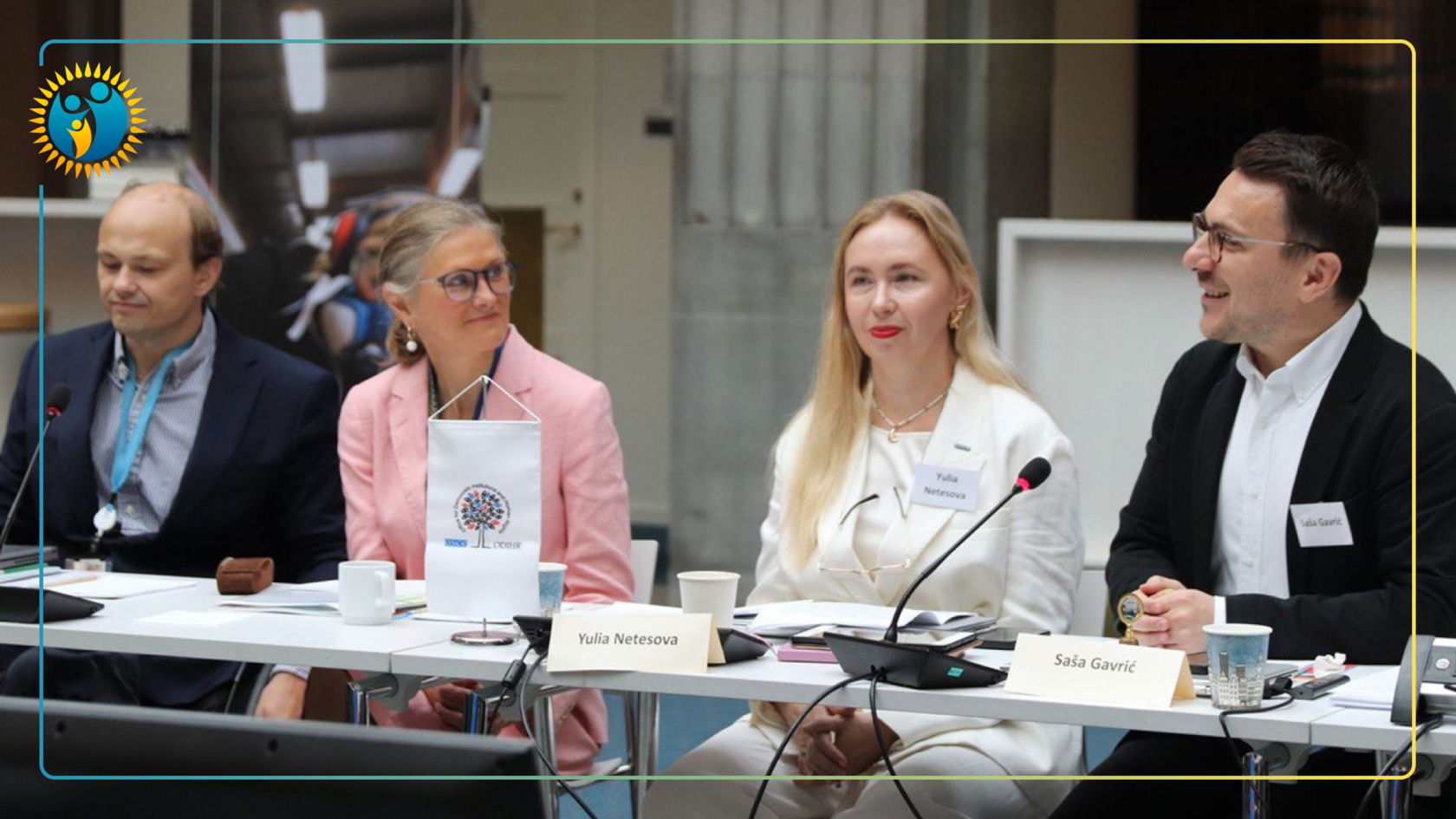
From September 9 to 12, 2025, Stockholm hosted an international training conference under the “Gender Equality in Politics” program, organized by the OSCE Office for Democratic Institutions and Human Rights (OSCE/ODIHR), the UN Women Regional Office for Europe and Central Asia (UN Women ECARO), and with the support of the Government of Sweden.
Among the participants was Gulmira Kanai, representative of the National Commission for Women Affairs, Family and Demographic Policy under the President of the Republic of Kazakhstan.
The conference brought together more than 30 representatives of government and non-governmental organizations from EU and Central Asian countries. Its main goal was to promote greater participation of women in politics, the implementation of gender-sensitive governance tools, and the development of modern approaches to public policy.
Discussions focused on the theory and practice of gender equality in politics, the role of women in decision-making and societal transformation, and innovative initiatives and programs in the field of gender equality.
A special session was dedicated to Sweden’s experience, where one of the world’s most progressive approaches to women’s political participation is in place. Participants met with government and parliamentary representatives, including Katarina Lundahl, State Secretary of the Ministry for Gender Equality, Dr. Lenita Freidenvall, Head of the Gender Equality Department of the Ministry of Employment, and members of the Riksdag Gender Equality Working Group.
Sweden remains a global leader in women’s political representation, with women holding around 46–47% of seats in parliament. As Swedish experts emphasized, the key factor lies not only in quotas but also in supportive mechanisms—flexible working conditions, equal distribution of family responsibilities, and changing traditional views of women’s roles.
This exchange of experience provided experts from Kazakhstan with insights into which practices could be adapted to national policies in order to create conditions for the full realization of women’s potential in public administration.
Among the participants was Gulmira Kanai, representative of the National Commission for Women Affairs, Family and Demographic Policy under the President of the Republic of Kazakhstan.
The conference brought together more than 30 representatives of government and non-governmental organizations from EU and Central Asian countries. Its main goal was to promote greater participation of women in politics, the implementation of gender-sensitive governance tools, and the development of modern approaches to public policy.
Discussions focused on the theory and practice of gender equality in politics, the role of women in decision-making and societal transformation, and innovative initiatives and programs in the field of gender equality.
A special session was dedicated to Sweden’s experience, where one of the world’s most progressive approaches to women’s political participation is in place. Participants met with government and parliamentary representatives, including Katarina Lundahl, State Secretary of the Ministry for Gender Equality, Dr. Lenita Freidenvall, Head of the Gender Equality Department of the Ministry of Employment, and members of the Riksdag Gender Equality Working Group.
Sweden remains a global leader in women’s political representation, with women holding around 46–47% of seats in parliament. As Swedish experts emphasized, the key factor lies not only in quotas but also in supportive mechanisms—flexible working conditions, equal distribution of family responsibilities, and changing traditional views of women’s roles.
This exchange of experience provided experts from Kazakhstan with insights into which practices could be adapted to national policies in order to create conditions for the full realization of women’s potential in public administration.
