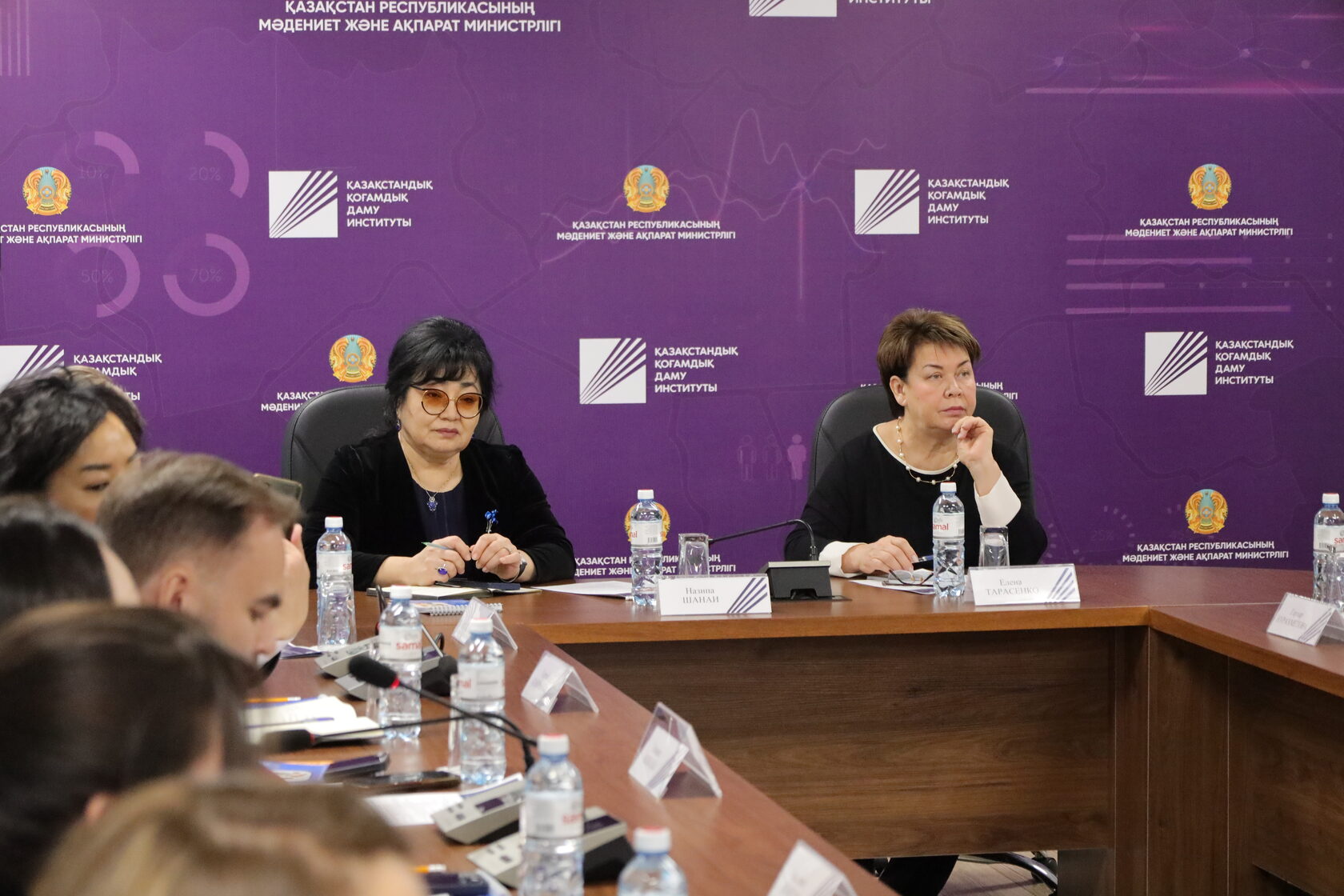
Astana hosted the presentation of the National Report on the Prevention of Domestic Violence — one of the key analytical studies shaping state initiatives aimed at protecting women and children. The report was prepared by the Center for Family and Gender Policy Research (CIOR) at the request of the Ministry of Culture and Information of the Republic of Kazakhstan.
The presentation took place on the first day of the UN-led international campaign “16 Days of Activism Against Gender-Based Violence”, an annual global movement uniting dozens of countries to raise awareness about violence and support for survivors. Kazakhstan traditionally participates in the campaign, reinforcing public dialogue on this critical topic.
In his welcoming remarks, Evgeny Kochetov, Vice Minister of Culture and Information, emphasized the importance of the study for shaping a modern and effective prevention policy.
The session was moderated by Zhuldizay Iskakova, Deputy Chairperson of the National Commission for Women Affairs, Family and Demographic Policy under the President of the Republic of Kazakhstan and Chair of the CIOR Board. She highlighted that the Center’s annual reports constitute an essential part of the systematic effort to assess the situation regarding domestic violence. According to her, such research allows not only tracking trends but also identifying deeper underlying causes, forming the basis for long-term and effective solutions.
The report consists of four major sections, covering everything from the assessment of the current situation to an analysis of hidden forms of violence that are rarely reflected in official statistics. It includes sociological data, expert assessments, and official indicators, making it one of the most comprehensive studies in recent years.
During the presentation, experts shared key findings and insights.
– Aknur Imashkul, Head of the Center, presented the main results, outlining current trends and risk factors requiring special attention.
– Botagoz Tukhzhanova, sociologist, discussed public perceptions of violence and explained the reasons behind the high latency of such cases.
– Dr. Zhanar Arganbayeva focused on the hidden consequences of violence that often go unnoticed but have long-term impacts on victims and children.
– Muslim Khasenov, lawyer and member of the National Commission, presented the legal section of the research, emphasizing the need to strengthen prevention measures and enhance the professional training of specialists.
– Asem Kusmanova concluded the expert panel by highlighting effective international and local early-intervention practices applicable in Kazakhstan.
The event brought together representatives of the National Commission, experts, academics, and government officials. Participants emphasized that ensuring the safety of women and children remains a top state priority. It was separately noted that President Kassym-Jomart Tokayev pays special attention to strengthening legal and institutional mechanisms of protection.
Following the presentations, participants engaged in a substantive discussion. Representatives of government agencies, the research community, and NGOs exchanged views on next steps. Proposals included enhancing interagency coordination, implementing modern risk assessment tools, expanding crisis services, and strengthening preventive work with youth and parents.
Participants concluded that the findings of the 2025 National Report will serve as the foundation for setting priorities for the coming year and will inform the development of new policies and programs in the field of violence prevention.
The presentation took place on the first day of the UN-led international campaign “16 Days of Activism Against Gender-Based Violence”, an annual global movement uniting dozens of countries to raise awareness about violence and support for survivors. Kazakhstan traditionally participates in the campaign, reinforcing public dialogue on this critical topic.
In his welcoming remarks, Evgeny Kochetov, Vice Minister of Culture and Information, emphasized the importance of the study for shaping a modern and effective prevention policy.
The session was moderated by Zhuldizay Iskakova, Deputy Chairperson of the National Commission for Women Affairs, Family and Demographic Policy under the President of the Republic of Kazakhstan and Chair of the CIOR Board. She highlighted that the Center’s annual reports constitute an essential part of the systematic effort to assess the situation regarding domestic violence. According to her, such research allows not only tracking trends but also identifying deeper underlying causes, forming the basis for long-term and effective solutions.
The report consists of four major sections, covering everything from the assessment of the current situation to an analysis of hidden forms of violence that are rarely reflected in official statistics. It includes sociological data, expert assessments, and official indicators, making it one of the most comprehensive studies in recent years.
During the presentation, experts shared key findings and insights.
– Aknur Imashkul, Head of the Center, presented the main results, outlining current trends and risk factors requiring special attention.
– Botagoz Tukhzhanova, sociologist, discussed public perceptions of violence and explained the reasons behind the high latency of such cases.
– Dr. Zhanar Arganbayeva focused on the hidden consequences of violence that often go unnoticed but have long-term impacts on victims and children.
– Muslim Khasenov, lawyer and member of the National Commission, presented the legal section of the research, emphasizing the need to strengthen prevention measures and enhance the professional training of specialists.
– Asem Kusmanova concluded the expert panel by highlighting effective international and local early-intervention practices applicable in Kazakhstan.
The event brought together representatives of the National Commission, experts, academics, and government officials. Participants emphasized that ensuring the safety of women and children remains a top state priority. It was separately noted that President Kassym-Jomart Tokayev pays special attention to strengthening legal and institutional mechanisms of protection.
Following the presentations, participants engaged in a substantive discussion. Representatives of government agencies, the research community, and NGOs exchanged views on next steps. Proposals included enhancing interagency coordination, implementing modern risk assessment tools, expanding crisis services, and strengthening preventive work with youth and parents.
Participants concluded that the findings of the 2025 National Report will serve as the foundation for setting priorities for the coming year and will inform the development of new policies and programs in the field of violence prevention.