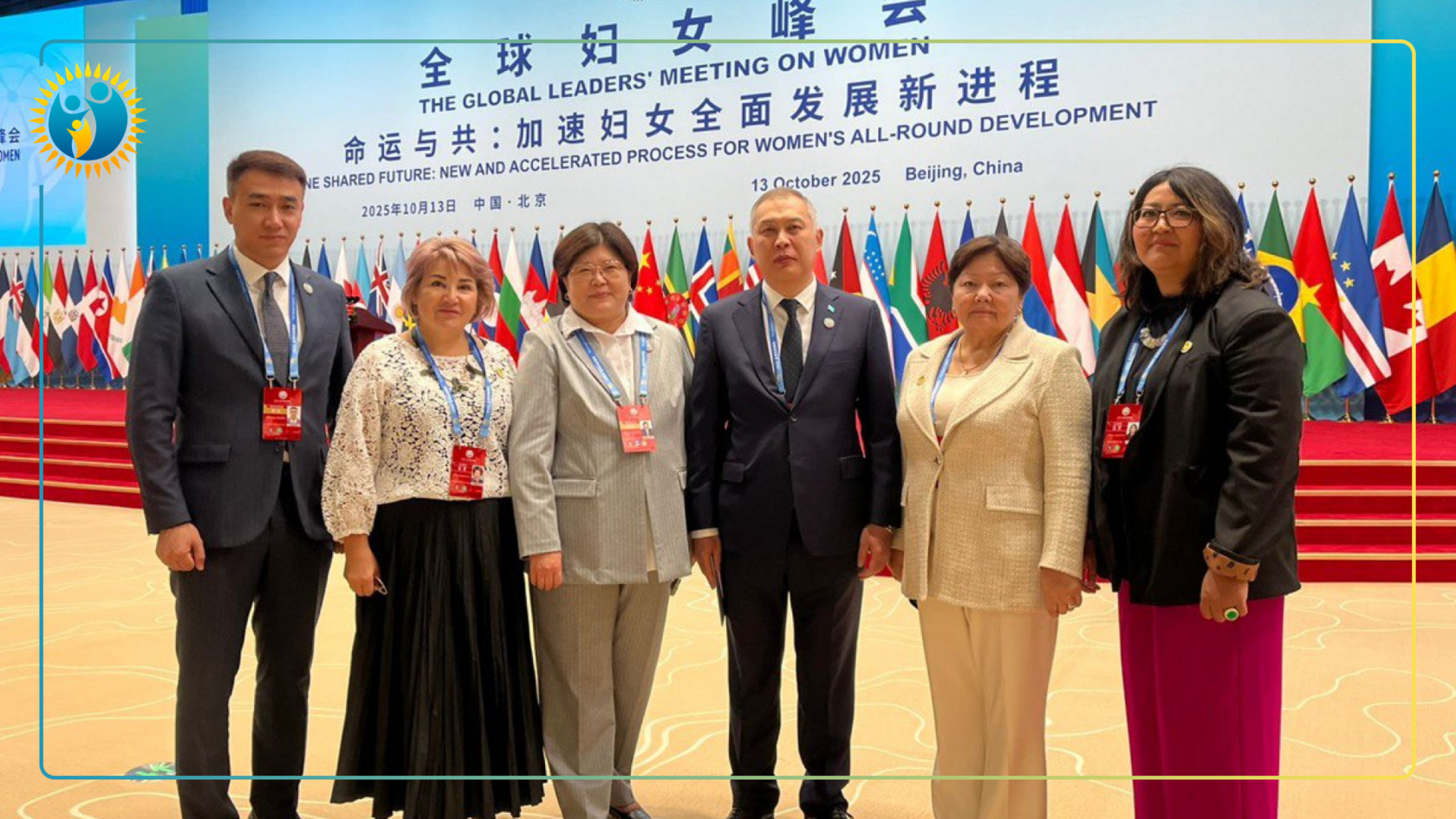
The Global Women’s Summit — one of the key international events dedicated to advancing gender equality and women’s empowerment — concluded in Beijing, gathering more than 800 delegates from 110 countries, including heads of state, representatives of international organizations, and women’s associations.
The summit reaffirmed that gender equality remains a top priority for the global community. Participants noted that despite significant progress, women around the world continue to face persistent barriers — from unequal access to resources to discrimination and violence.
China, as the initiator of the forum, proposed a number of practical measures to support women. In his opening address, President Xi Jinping emphasized that peace and security form the foundation for the realization of women’s potential, and that women’s participation in decision-making is key to achieving sustainable development.
Kazakhstan was represented by Elvira Azimova, Chairperson of the Constitutional Court, and Zulfiya Baysakova, representative of the National Commission for Women Affairs, Family and Demographic Policy under the President of the Republic of Kazakhstan.
In her remarks, Zulfiya Baysakova highlighted the importance of international cooperation and knowledge exchange. She noted that since the adoption of the Beijing Platform for Action in 1995, Kazakhstan has consistently implemented its principles — supporting women’s participation in public life and improving legislation to protect the rights of women and children.
Elvira Azimova, in her plenary speech, focused on the need to strengthen legal and institutional mechanisms for the protection of women and children, as well as on the exchange of best international practices.
The National Commission for Women Affairs, Family and Demographic Policy under the President of the Republic of Kazakhstan plays a key role in advancing the national gender agenda — from promoting women’s leadership and economic independence to preventing violence and strengthening family values. The Kazakhstani delegation underlined the need to further develop institutional frameworks, including the establishment of a Committee on the Rights of Women and Girls and the adoption of a modern law on domestic violence prevention.
The summit concluded with a Chair’s Statement, which outlined the main directions of international policy in the field of gender equality. Participants emphasized that the time has come for concrete action.
For Kazakhstan, participation in the Beijing summit reaffirmed the country’s commitment to the principles of justice, partnership, and equal opportunities. The National Commission expressed its intention to continue strengthening dialogue with international partners and to develop new initiatives aimed at enhancing the status, rights, and leadership of women in Kazakhstan.
The summit reaffirmed that gender equality remains a top priority for the global community. Participants noted that despite significant progress, women around the world continue to face persistent barriers — from unequal access to resources to discrimination and violence.
China, as the initiator of the forum, proposed a number of practical measures to support women. In his opening address, President Xi Jinping emphasized that peace and security form the foundation for the realization of women’s potential, and that women’s participation in decision-making is key to achieving sustainable development.
Kazakhstan was represented by Elvira Azimova, Chairperson of the Constitutional Court, and Zulfiya Baysakova, representative of the National Commission for Women Affairs, Family and Demographic Policy under the President of the Republic of Kazakhstan.
In her remarks, Zulfiya Baysakova highlighted the importance of international cooperation and knowledge exchange. She noted that since the adoption of the Beijing Platform for Action in 1995, Kazakhstan has consistently implemented its principles — supporting women’s participation in public life and improving legislation to protect the rights of women and children.
Elvira Azimova, in her plenary speech, focused on the need to strengthen legal and institutional mechanisms for the protection of women and children, as well as on the exchange of best international practices.
The National Commission for Women Affairs, Family and Demographic Policy under the President of the Republic of Kazakhstan plays a key role in advancing the national gender agenda — from promoting women’s leadership and economic independence to preventing violence and strengthening family values. The Kazakhstani delegation underlined the need to further develop institutional frameworks, including the establishment of a Committee on the Rights of Women and Girls and the adoption of a modern law on domestic violence prevention.
The summit concluded with a Chair’s Statement, which outlined the main directions of international policy in the field of gender equality. Participants emphasized that the time has come for concrete action.
For Kazakhstan, participation in the Beijing summit reaffirmed the country’s commitment to the principles of justice, partnership, and equal opportunities. The National Commission expressed its intention to continue strengthening dialogue with international partners and to develop new initiatives aimed at enhancing the status, rights, and leadership of women in Kazakhstan.
