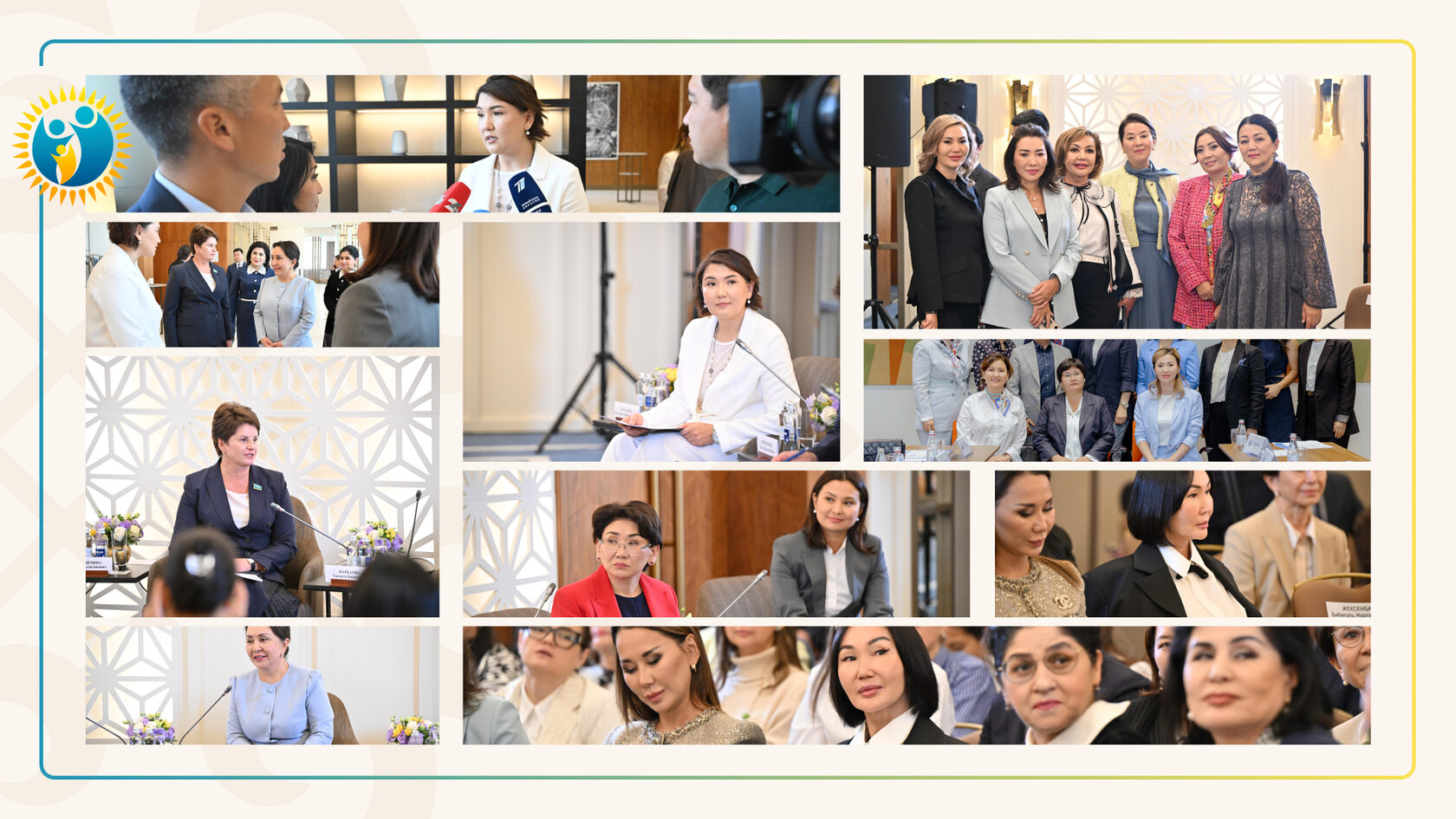
Today in Astana, as part of the official visit of the parliamentary delegation of the Republic of Uzbekistan headed by Chairperson of the Senate of the Oliy Majlis Tanzila Narbaeva, a meeting was held dedicated to issues of expanding women’s economic opportunities.
The event took place on a joint platform of the Senate of the Parliament of the Republic of Kazakhstan and the National Commission for Women Affairs, Family and Demographic Policy under the Presideant of the Republic of Kazakhstan. The meeting was attended by representatives of the Senate of Uzbekistan, members of the Senate of the Parliament of Kazakhstan, members of the National Commission, women entrepreneurs from the regions of the country, as well as experts of the Club under the Senate of the Parliament of Kazakhstan.
The main focus was placed on increasing women’s economic activity, countering domestic violence and social stereotypes, ensuring gender equality, and strengthening inter-parliamentary cooperation.
In her remarks, Tanzila Narbaeva noted that over the past four years Uzbekistan has adopted about 40 laws aimed at protecting women’s interests. According to her, every draft law in the country is subject to mandatory gender expertise. Women’s participation in public and political life has reached about 40 percent. For this purpose, active women undergo special training at the Academy of Public Administration, while women entrepreneurs are provided with grants. In addition, banks offer collateral-free loans to women and support their business projects from the idea stage to market entry.
Tanzila Narbaeva emphasized that expanding women’s economic opportunities is key to sustainable development of society. She also touched upon measures to combat stereotypes and prevent domestic violence, noting that women’s honesty and responsibility contribute to creating an environment free of corruption.
The meeting moderator – Deputy Chairperson of the National Commission and Advisor to the Chairperson of the Senate, Zhuldyzai Iskakova – drew attention to the high level of women’s engagement in business: today, around 50% of business entities in Kazakhstan are led by women, the highest figure in Central Asia. At the same time, women still make up the majority among socially vulnerable groups, which makes expanded access to concessional loans and grants a priority task.
She also stressed that the gender agenda is being consistently advanced by the Senate of Kazakhstan. The issue is systematically supported by Chairperson of the Senate Maulen Ashimbayev and raised at the meetings and expert platforms of the Chamber.
Deputy Chairperson of the Senate Olga Perepechina highlighted the institutional changes initiated by President Kassym-Jomart Tokayev. She pointed out that the restoration of the Constitutional Court and the institution of the Ombudsman has significantly strengthened mechanisms for human rights protection and created new opportunities for equality. At the same time, in her view, priority tasks remain the support of women’s entrepreneurship and access to financing.
During the meeting, women entrepreneurs from Almaty, Astana, and other regions shared their experience and new initiatives, emphasizing the practical importance of state and international business support programs.
In conclusion, participants expressed confidence that such dialogue platforms should become regular and contribute to uniting the potential of women in Central Asia, as well as further developing regional cooperation.
The event took place on a joint platform of the Senate of the Parliament of the Republic of Kazakhstan and the National Commission for Women Affairs, Family and Demographic Policy under the Presideant of the Republic of Kazakhstan. The meeting was attended by representatives of the Senate of Uzbekistan, members of the Senate of the Parliament of Kazakhstan, members of the National Commission, women entrepreneurs from the regions of the country, as well as experts of the Club under the Senate of the Parliament of Kazakhstan.
The main focus was placed on increasing women’s economic activity, countering domestic violence and social stereotypes, ensuring gender equality, and strengthening inter-parliamentary cooperation.
In her remarks, Tanzila Narbaeva noted that over the past four years Uzbekistan has adopted about 40 laws aimed at protecting women’s interests. According to her, every draft law in the country is subject to mandatory gender expertise. Women’s participation in public and political life has reached about 40 percent. For this purpose, active women undergo special training at the Academy of Public Administration, while women entrepreneurs are provided with grants. In addition, banks offer collateral-free loans to women and support their business projects from the idea stage to market entry.
Tanzila Narbaeva emphasized that expanding women’s economic opportunities is key to sustainable development of society. She also touched upon measures to combat stereotypes and prevent domestic violence, noting that women’s honesty and responsibility contribute to creating an environment free of corruption.
The meeting moderator – Deputy Chairperson of the National Commission and Advisor to the Chairperson of the Senate, Zhuldyzai Iskakova – drew attention to the high level of women’s engagement in business: today, around 50% of business entities in Kazakhstan are led by women, the highest figure in Central Asia. At the same time, women still make up the majority among socially vulnerable groups, which makes expanded access to concessional loans and grants a priority task.
She also stressed that the gender agenda is being consistently advanced by the Senate of Kazakhstan. The issue is systematically supported by Chairperson of the Senate Maulen Ashimbayev and raised at the meetings and expert platforms of the Chamber.
Deputy Chairperson of the Senate Olga Perepechina highlighted the institutional changes initiated by President Kassym-Jomart Tokayev. She pointed out that the restoration of the Constitutional Court and the institution of the Ombudsman has significantly strengthened mechanisms for human rights protection and created new opportunities for equality. At the same time, in her view, priority tasks remain the support of women’s entrepreneurship and access to financing.
During the meeting, women entrepreneurs from Almaty, Astana, and other regions shared their experience and new initiatives, emphasizing the practical importance of state and international business support programs.
In conclusion, participants expressed confidence that such dialogue platforms should become regular and contribute to uniting the potential of women in Central Asia, as well as further developing regional cooperation.