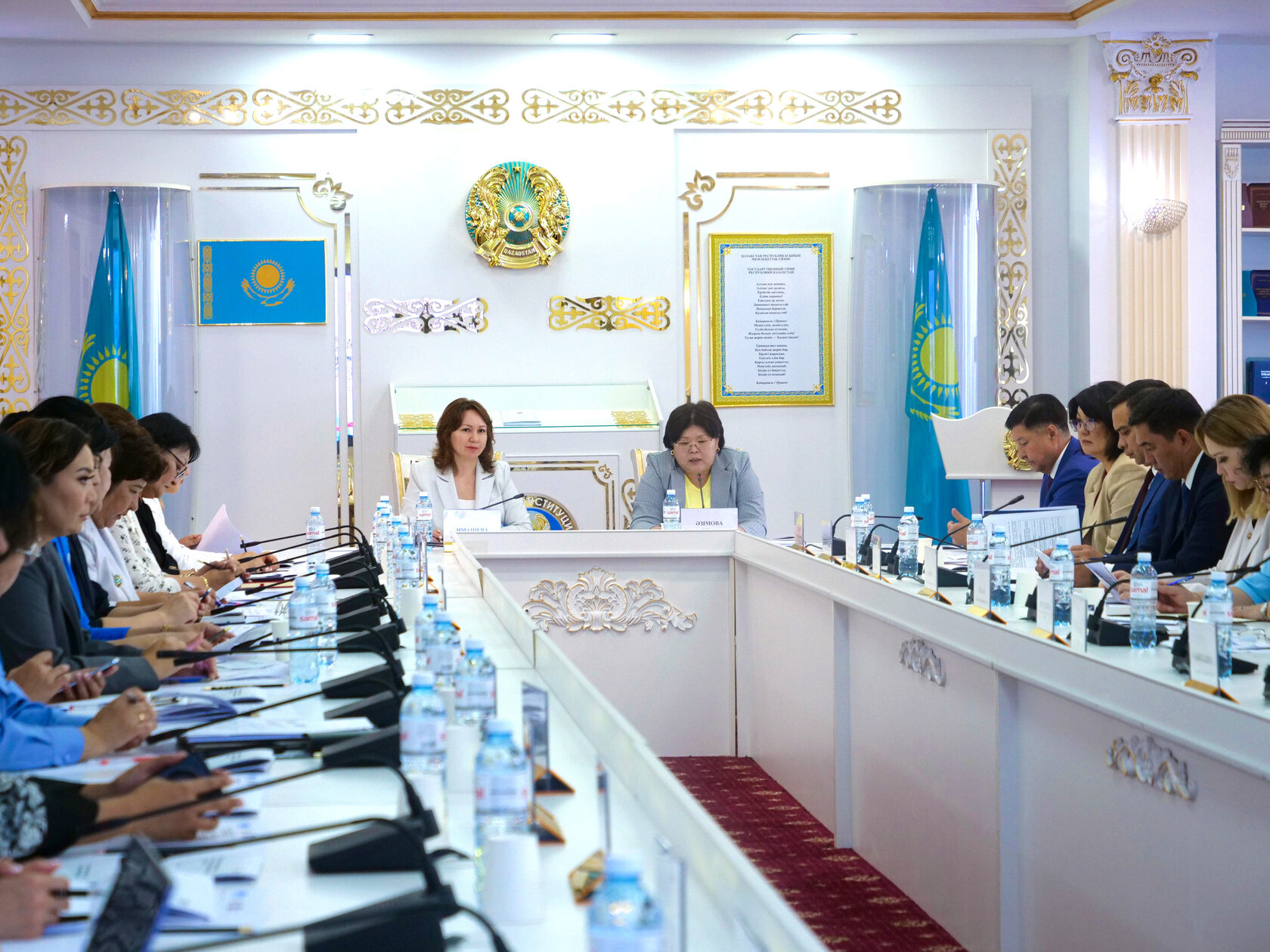
On July 29, in Astana, the National Commission for Women's Affairs, Family and Demographic Policy under the President of the Republic of Kazakhstan, together with the Constitutional Court of the Republic of Kazakhstan, held an interdepartmental discussion on "Constitutional guarantees of family policy and gender justice."
The protection of the family, motherhood, fatherhood and childhood has been consistently identified by President of the Republic of Kazakhstan Kassym-Jomart Tokayev as one of the key priorities of state policy.
The protection of the family, motherhood, fatherhood and childhood has been consistently identified by President of the Republic of Kazakhstan Kassym-Jomart Tokayev as one of the key priorities of state policy.
The entry into force of the new Constitution gave these issues new legal content and set the task for government agencies to form unified approaches to the implementation of constitutional guarantees of the family, equality of rights and gender justice. An interdepartmental discussion was devoted to these issues, bringing together members of the National Commission, representatives of the Constitutional Court, government agencies, human rights institutions and the expert community.
The moderator of the round table was Deputy Chairman of the National Commission, Commissioner for Family Affairs Snezhanna Imasheva. Welcoming the participants, she noted that the new Constitution forms a modern model of state protection of the family, based on the recognition of it as one of the most important social values, as well as on the duty of the state to create conditions for its well-being and protect the rights of each family member.
The moderator of the round table was Deputy Chairman of the National Commission, Commissioner for Family Affairs Snezhanna Imasheva. Welcoming the participants, she noted that the new Constitution forms a modern model of state protection of the family, based on the recognition of it as one of the most important social values, as well as on the duty of the state to create conditions for its well-being and protect the rights of each family member.
"Our task today is not just to reveal the content of the norms of the new Constitution, but to develop common approaches to their practical implementation. The effectiveness of state family policy and the level of protection of the rights of each Kazakh family depend on this," Snezhanna Imasheva emphasized.
She also noted that the preservation of traditional family values and the protection of the rights of each family member require coordinated actions by all state institutions. One of the key mechanisms of such work has become a network of 160 Family Support Centers formed on behalf of the President, which provide comprehensive assistance to citizens in difficult situations and provide families with access to social, psychological and legal services.
Chairman of the Constitutional Court of the Republic of Kazakhstan Elvira Azimova emphasized that the constitutional meaning of Article 30 of the Basic Law is much broader than its literal content.
"The family is consolidated not only as an object of social protection, but also as an independent constitutional value based on the dignity of the individual, freedom, equality of spouses, mutual responsibility of family members and the continuity of generations," said Elvira Azimova.
Chairman of the Constitutional Court of the Republic of Kazakhstan Elvira Azimova emphasized that the constitutional meaning of Article 30 of the Basic Law is much broader than its literal content.
"The family is consolidated not only as an object of social protection, but also as an independent constitutional value based on the dignity of the individual, freedom, equality of spouses, mutual responsibility of family members and the continuity of generations," said Elvira Azimova.
According to her, the protection of the family and ensuring gender justice do not contradict each other, but are interrelated constitutional principles that must be implemented comprehensively in legislation and law enforcement practice.
Judge of the Constitutional Court of the Republic of Kazakhstan Aizhan Zhatkanbayeva emphasized the role of the Constitutional Court in ensuring constitutional guarantees of the family and the implementation of the principle of gender equality. According to her, the consolidation of the equal nature of marriage in the Constitution is an important guideline for improving legislation and law enforcement practices that ensure equal opportunities for women and men.
She noted that a significant part of the appeals to the Constitutional Court on family law issues are related to the protection of the principle of equality. Considering such cases, the Court forms legal positions aimed at eliminating unjustified differences in the legal status of citizens and ensuring the uniform application of constitutional norms.
The Constitutional Court's decisions concerning the adoption of children, taking into account the period of child care when assigning pension payments, as well as the application of certain norms of administrative legislation in relation to parents who raise children independently were cited as examples.
According to Aizhan Zhatkanbayeva, the legal positions of the Constitutional Court contribute to the consistent alignment of legislation with the constitutional principles of equality, justice and non-discrimination.
According to Human Rights Commissioner Artur Lastaev, state family policy should be based not only on the interests of the family as a social institution, but above all on the need to protect the rights of a particular person.
"That is why the provisions on marriage are specified in Article 30 of the Constitution. It is a voluntary union registered only by the state. Men and women have equal rights in it. A family can be sustainable only when it is based on voluntariness, equality, mutual respect, shared parental responsibility and the unconditional safety of the child," he said.
Vice Minister of Culture and Information of the Republic of Kazakhstan Evgeny Kochetov presented the results of the Ministry's work on the development of the family support system and the implementation of state family policy. He noted that the consolidation of the principles of family protection in the Constitution, as well as the instructions of the President, announced at the meeting of the National Kurultai, determine further priorities of state policy aimed at strengthening the institution of the family, responsible parenting and ensuring equality of rights.
According to the Vice Minister, international assessments confirm the effectiveness of Kazakhstan's policy in ensuring equal rights and opportunities for women and men. In particular, according to the latest World Bank report, the country received 85 out of 100 points in terms of the level of development of the relevant regulatory, legal and institutional system.
Among the key achievements of recent years, Evgeny Kochetov highlighted the creation of a network of Family Support Centers, which has become an important element of the state infrastructure for helping families. He stressed that the further development of the system will focus on strengthening the institution of parenthood, expanding family support measures and creating conditions for the well-being of children.
Chairman of the Human Rights Commission under the President, Zhakip Asanov, emphasized the need to further strengthen the institution of responsible fatherhood and to involve men more actively in family life. According to him, the formation of stable family relations requires systematic preparation of young people for marriage, the development of a culture of family communication and parental support at all stages of family life.
"A strong family does not arise by itself. We need the efforts of the family itself, as well as help and assistance from the state," he said.
As a result of the discussion, further areas of joint work have been identified. They provide for the improvement of family legislation and law enforcement practice, improving the effectiveness of the execution of court decisions on family disputes, the development of responsible parenting programs, expanding the availability of social, psychological and legal assistance to families, as well as strengthening legal education.
Thus, the discussion showed that the implementation of constitutional guarantees of family policy and gender justice requires coordinated actions by all state institutions. The Constitutional Court, the National Commission, human rights institutions and state bodies consistently build a unified system for the protection of the family, motherhood, fatherhood and childhood.
Judge of the Constitutional Court of the Republic of Kazakhstan Aizhan Zhatkanbayeva emphasized the role of the Constitutional Court in ensuring constitutional guarantees of the family and the implementation of the principle of gender equality. According to her, the consolidation of the equal nature of marriage in the Constitution is an important guideline for improving legislation and law enforcement practices that ensure equal opportunities for women and men.
She noted that a significant part of the appeals to the Constitutional Court on family law issues are related to the protection of the principle of equality. Considering such cases, the Court forms legal positions aimed at eliminating unjustified differences in the legal status of citizens and ensuring the uniform application of constitutional norms.
The Constitutional Court's decisions concerning the adoption of children, taking into account the period of child care when assigning pension payments, as well as the application of certain norms of administrative legislation in relation to parents who raise children independently were cited as examples.
According to Aizhan Zhatkanbayeva, the legal positions of the Constitutional Court contribute to the consistent alignment of legislation with the constitutional principles of equality, justice and non-discrimination.
According to Human Rights Commissioner Artur Lastaev, state family policy should be based not only on the interests of the family as a social institution, but above all on the need to protect the rights of a particular person.
"That is why the provisions on marriage are specified in Article 30 of the Constitution. It is a voluntary union registered only by the state. Men and women have equal rights in it. A family can be sustainable only when it is based on voluntariness, equality, mutual respect, shared parental responsibility and the unconditional safety of the child," he said.
Vice Minister of Culture and Information of the Republic of Kazakhstan Evgeny Kochetov presented the results of the Ministry's work on the development of the family support system and the implementation of state family policy. He noted that the consolidation of the principles of family protection in the Constitution, as well as the instructions of the President, announced at the meeting of the National Kurultai, determine further priorities of state policy aimed at strengthening the institution of the family, responsible parenting and ensuring equality of rights.
According to the Vice Minister, international assessments confirm the effectiveness of Kazakhstan's policy in ensuring equal rights and opportunities for women and men. In particular, according to the latest World Bank report, the country received 85 out of 100 points in terms of the level of development of the relevant regulatory, legal and institutional system.
Among the key achievements of recent years, Evgeny Kochetov highlighted the creation of a network of Family Support Centers, which has become an important element of the state infrastructure for helping families. He stressed that the further development of the system will focus on strengthening the institution of parenthood, expanding family support measures and creating conditions for the well-being of children.
Chairman of the Human Rights Commission under the President, Zhakip Asanov, emphasized the need to further strengthen the institution of responsible fatherhood and to involve men more actively in family life. According to him, the formation of stable family relations requires systematic preparation of young people for marriage, the development of a culture of family communication and parental support at all stages of family life.
"A strong family does not arise by itself. We need the efforts of the family itself, as well as help and assistance from the state," he said.
As a result of the discussion, further areas of joint work have been identified. They provide for the improvement of family legislation and law enforcement practice, improving the effectiveness of the execution of court decisions on family disputes, the development of responsible parenting programs, expanding the availability of social, psychological and legal assistance to families, as well as strengthening legal education.
Thus, the discussion showed that the implementation of constitutional guarantees of family policy and gender justice requires coordinated actions by all state institutions. The Constitutional Court, the National Commission, human rights institutions and state bodies consistently build a unified system for the protection of the family, motherhood, fatherhood and childhood.