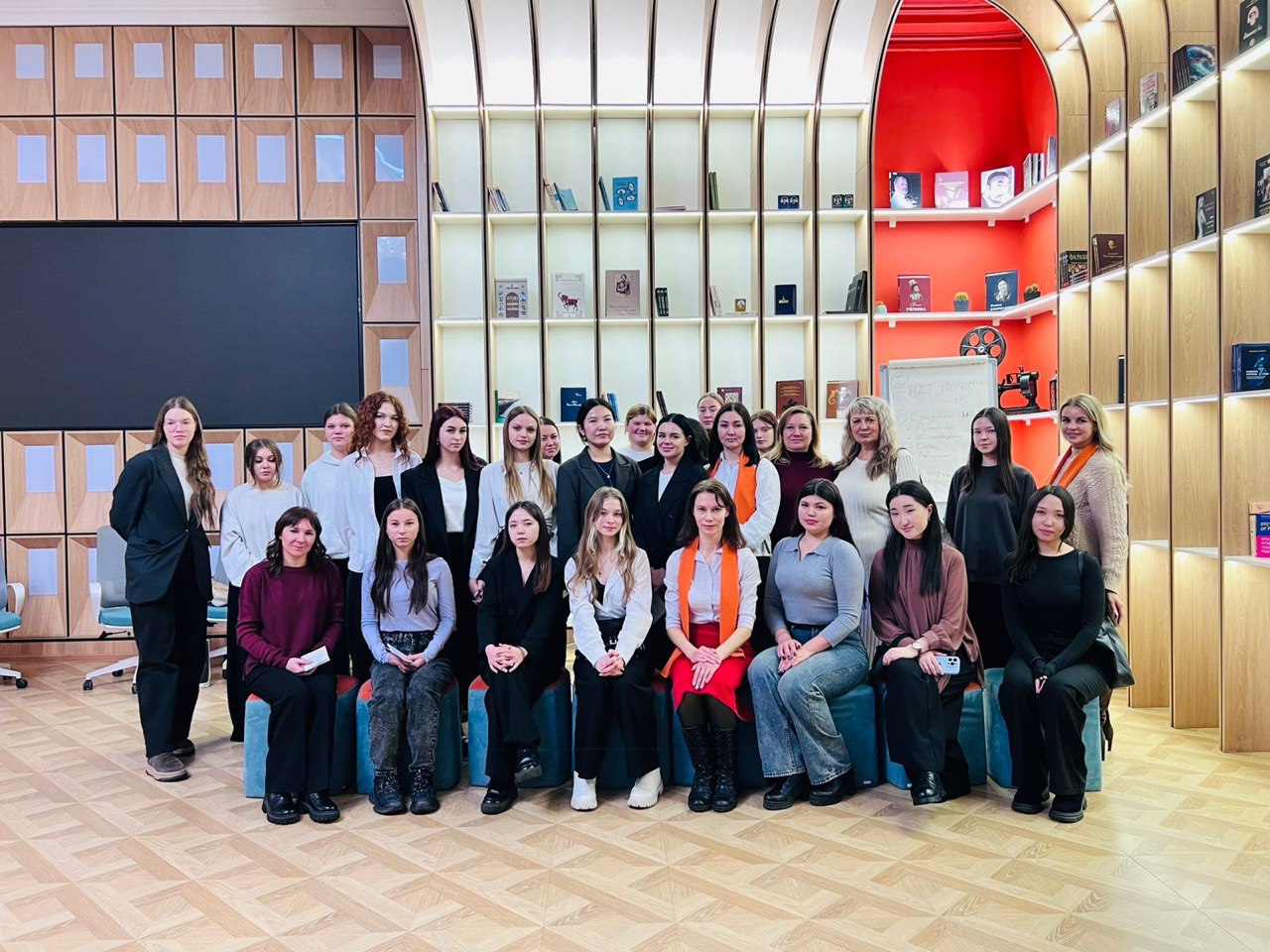
A seminar-training dedicated to personal boundaries and the skill of saying “no” with confidence was held in the North Kazakhstan Region with the support of the National Commission on Women’s Affairs and Family and Demographic Policy under the President of the Republic of Kazakhstan. The event took place as part of the international “16 Days of Activism Against Gender-Based Violence” campaign and brought together more than 40 participants.
According to Elena Semidotskikh, member of the National Commission, many women indeed struggle to say “no” — often out of fear of seeming rude, disappointing someone, or stepping outside socially accepted expectations. “But it is precisely this ‘no’ that becomes the moment where respect begins — first for oneself, and then from others,” she emphasized.
In a lively discussion format, participants explored how to recognize violations of personal boundaries, why feelings of guilt often prevent women from protecting themselves, and which phrases help decline respectfully and calmly. Psychologist Olga Agapova presented practical tools designed to strengthen inner confidence and preserve dignity even in difficult situations.
Particular interest was sparked by mini-practices, where participants tested new wording, analyzed real-life cases, and asked questions to the expert. Many admitted that for the first time they felt they had the right to say “no” — and realized how this simple skill is directly connected to personal safety and self-respect.
Organizers note that during the campaign against gender-based violence, it is important not only to talk about the right to protection but also to develop practical skills that help women feel more confident and empowered in their daily lives. Such initiatives contribute to building a culture where personal boundaries are seen as a norm, and dignity — as a firm and essential inner foundation.
According to Elena Semidotskikh, member of the National Commission, many women indeed struggle to say “no” — often out of fear of seeming rude, disappointing someone, or stepping outside socially accepted expectations. “But it is precisely this ‘no’ that becomes the moment where respect begins — first for oneself, and then from others,” she emphasized.
In a lively discussion format, participants explored how to recognize violations of personal boundaries, why feelings of guilt often prevent women from protecting themselves, and which phrases help decline respectfully and calmly. Psychologist Olga Agapova presented practical tools designed to strengthen inner confidence and preserve dignity even in difficult situations.
Particular interest was sparked by mini-practices, where participants tested new wording, analyzed real-life cases, and asked questions to the expert. Many admitted that for the first time they felt they had the right to say “no” — and realized how this simple skill is directly connected to personal safety and self-respect.
Organizers note that during the campaign against gender-based violence, it is important not only to talk about the right to protection but also to develop practical skills that help women feel more confident and empowered in their daily lives. Such initiatives contribute to building a culture where personal boundaries are seen as a norm, and dignity — as a firm and essential inner foundation.